
An Italian bottle of mineral water can need an Indonesian SNI mark.
SNI marks are more common than many people realise. From PaperOne copier paper manufactured in Indonesia to Acqua Panna mineral water imported from Italy, both products visibly carry Indonesia's SNI certification mark. The key takeaway for foreign manufacturers is simple: Being an established international brand does not automatically exempt a product from Indonesia's regulatory requirements. If a product falls under a mandatory SNI category, companies may need to address certification, applicable standards, testing, conformity assessment, import requirements, and labelling before entering the Indonesian market. The next time you pick up a product in Indonesia, take a closer look at the packaging, you may start noticing SNI marks everywhere.
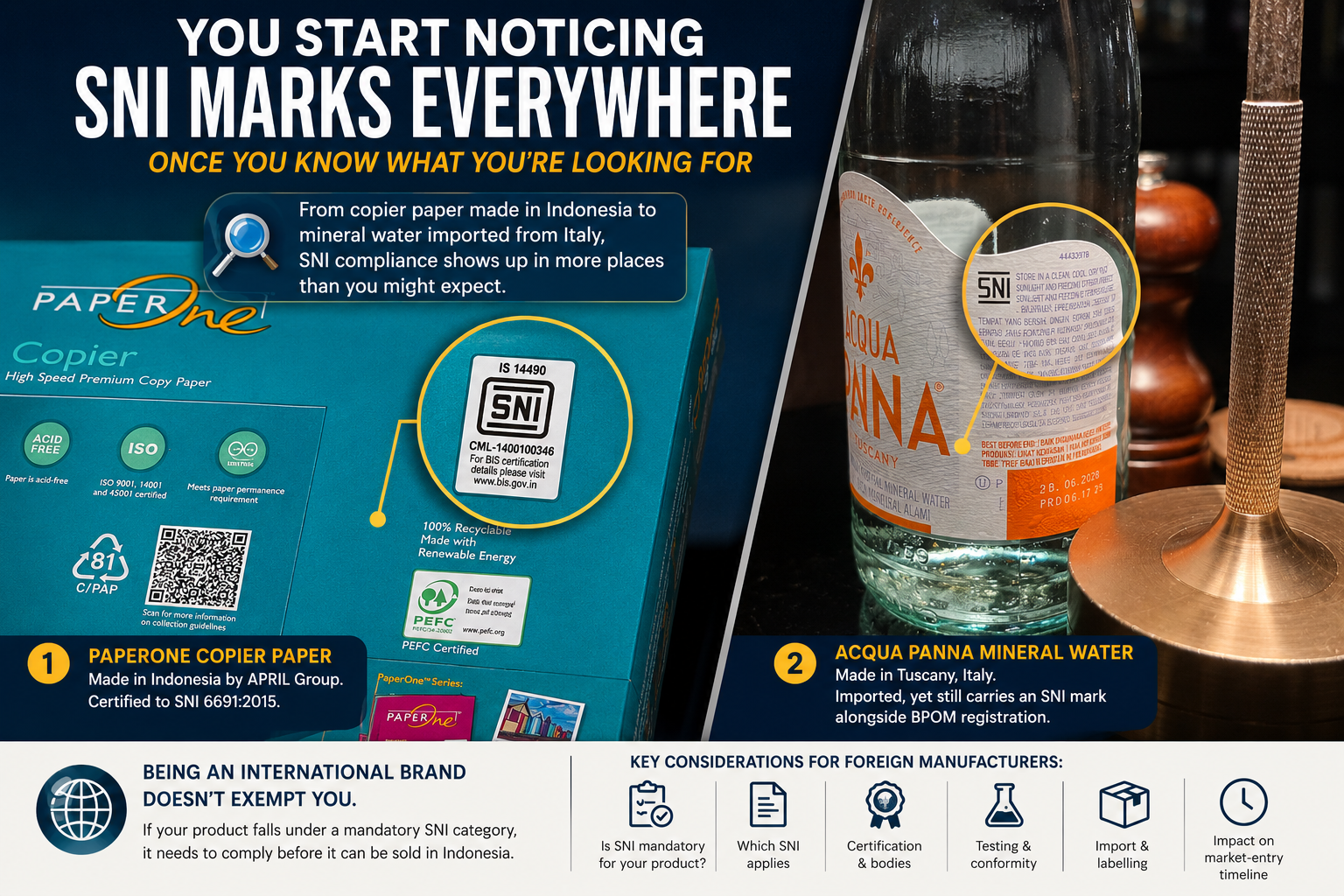
I didn't expect to find one on a bottle of Acqua Panna either.
But once you start looking for Indonesia's SNI (Indonesian National Standard) marks, you begin seeing them in places you might not expect.
Two examples caught my attention recently.
1️⃣ PaperOne copier paper
Manufactured in Indonesia by APRIL Group, the packaging carries SNI 6691:2015 and its certification number.
Copier paper isn't exactly the first product that comes to mind when people think about regulated products.
But certain paper products are subject to mandatory SNI requirements in Indonesia.
2️⃣ Acqua Panna mineral water
This one was more interesting.
The product is made in Tuscany, Italy and imported into Indonesia.
Yet on the bottle, alongside the BPOM registration number, there is an SNI mark.
And that's an important point for foreign manufacturers:
Being an international brand doesn't automatically mean you're exempt from Indonesia's product standards.
If your product falls under a mandatory SNI category, entering the Indonesian market can involve more than simply finding an importer and registering the product.
You may need to consider:
→ Whether SNI is mandatory for your product → Which Indonesian standard (SNI) applies → Certification requirements and approved certification bodies → Testing and conformity assessment → Import and labelling requirements → How compliance affects your Indonesia market-entry timeline
This is where many overseas companies underestimate the complexity of entering Indonesia.
The question isn't simply:
"Can I sell this product in Indonesia?"
It's:
"What Indonesian regulatory requirements must I satisfy before I can sell it?"
And sometimes, the answer is sitting right there on the packaging.
Now I'm curious:
What's the most unexpected product you've spotted carrying an SNI mark?
Have you ever checked the packaging of products around you for SNI?
Ready to Take Action?
Speak with our specialists about your specific regulatory requirements.
Book a Free Consultation