
This Rule Has Been Law in Indonesia Since April. Most Importers Still Don't Know About It.
Permendag No. 9/2026 has made the Importer of Record legally exposed to forced labor allegations in their supply chain since April 2026, through an investigation mechanism most foreign manufacturers still haven't been briefed on. The regulation also ties into Indonesia's own defense against a US tariff threat, and sits alongside a newer BPJPH rule tightening upstream verification before customs declarations are even filed.
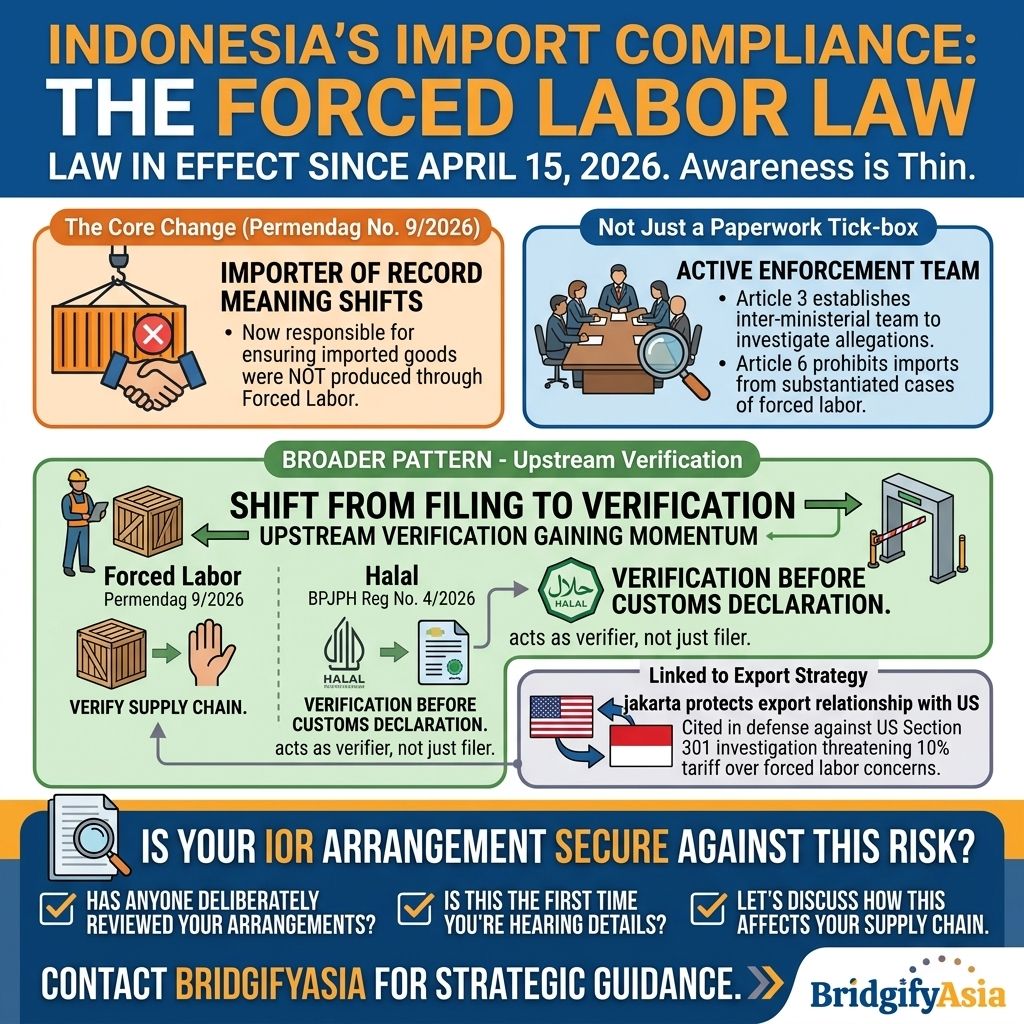
A regulation that changes what "Importer of Record" actually means in Indonesia has been in effect since April 15, 2026, and in my conversations with foreign manufacturers, awareness of it still seems thin, six months in.
Under Permendag No. 9/2026, importers are required to ensure the goods they bring into Indonesia weren't produced through forced labor. The mechanism isn't a one-time certification you file and forget: Article 3 establishes an inter-ministerial investigation team specifically to examine allegations of forced labor tied to imported goods, and Article 6 prohibits the import of anything that investigation proves was produced that way. So the real exposure isn't a document you're missing, it's what happens if a complaint gets raised and substantiated against your supply chain, a risk that doesn't end once your goods have already cleared.
Worth knowing this isn't happening in isolation. Indonesia has specifically cited this regulation in its own defense against a US Section 301 investigation that's threatening a 10% additional tariff on Indonesian exports over forced labor concerns. In other words, Jakarta is tightening what comes in partly to protect what goes out, Indonesia's own export relationship with the US is part of why this exists.
This fits a broader pattern worth watching, even if it's not one single coordinated policy: Indonesia's import compliance system is leaning harder on upstream verification generally, not just forced labor. A BPJPH regulation issued this past August, Regulation No. 4/2026, now requires halal conformity verification to happen before the importer even submits their customs declaration, checked against specific document codes inside the customs system itself. Two different regulators, two different concerns, but the same direction: being the Importer of Record in Indonesia increasingly means actively verifying compliance upstream, not just filing the right paperwork after goods arrive.
If your IOR arrangement, your own entity or a partner's, hasn't been reviewed against what Permendag 9/2026 actually requires, that's worth doing deliberately rather than finding out during an investigation. Has anyone actually walked you through what this regulation means for your specific supply chain, or is this the first time you're hearing the details?
Ready to Take Action?
Speak with our specialists about your specific regulatory requirements.
Book a Free Consultation