
Two Indonesia Regulatory Deadlines, Just 14 Days Apart
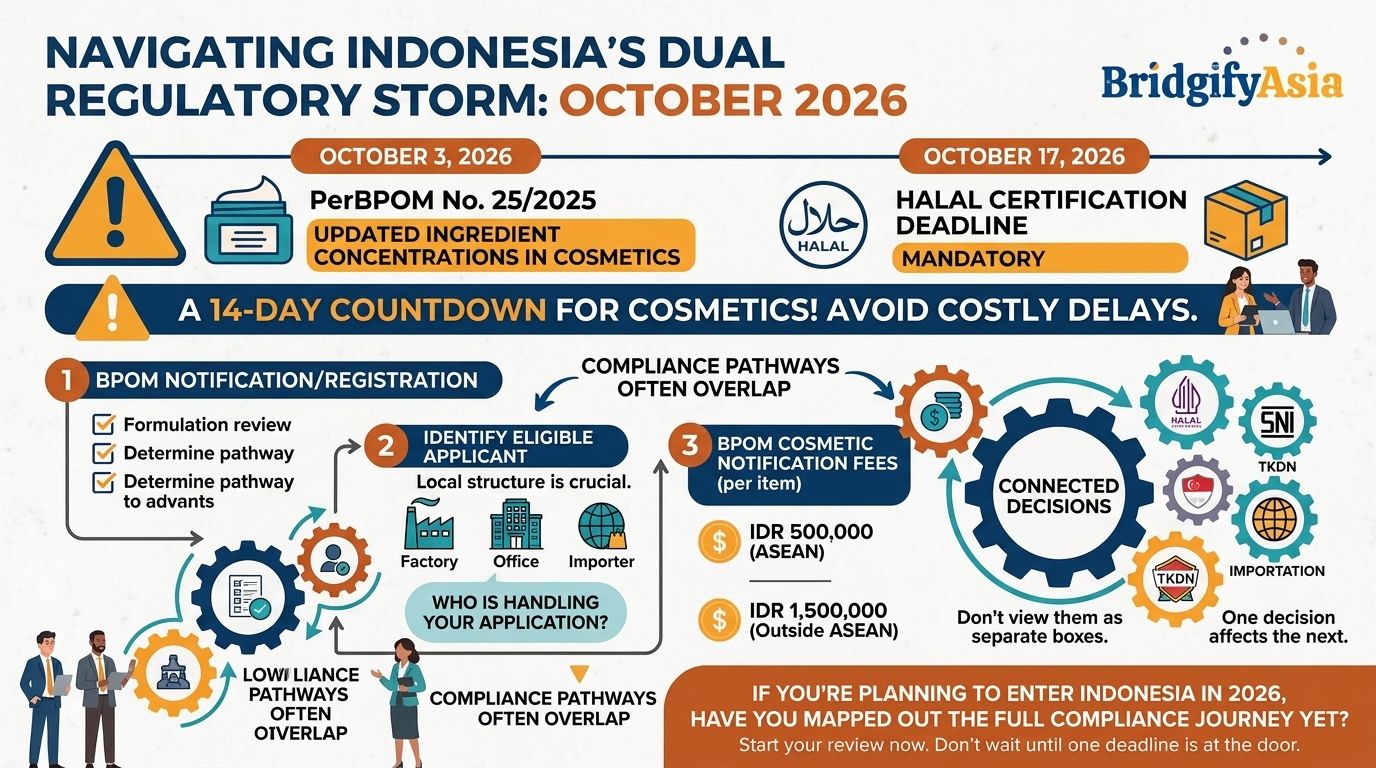
Indonesia's October 2026 regulatory landscape deserves more attention than just the halal certification deadline. With updated BPOM cosmetic requirements taking effect on October 3, followed by the October 17 halal deadline, foreign manufacturers need to look at BPOM, halal, SNI, TKDN and importation as part of one connected market-entry strategy, not separate compliance checkboxes.
Most companies preparing to enter Indonesia are probably already aware of the October 17, 2026 halal certification deadline.
But there is another regulatory date worth paying attention to, and it comes two weeks earlier.
On October 3, 2026, the updated requirements under PerBPOM No. 25/2025 are scheduled to take full effect, including changes affecting the permitted concentrations of certain ingredients used in cosmetics.
Then, just 14 days later, comes the October 17 halal certification deadline.
For companies outside Indonesia, the challenge is not simply keeping track of two dates. The bigger issue is that these compliance requirements often overlap.
A cosmetics manufacturer may need to review whether its formulation meets the applicable BPOM requirements, determine the appropriate BPOM notification or registration pathway, establish who will be responsible for the application in Indonesia, and at the same time assess whether halal certification and other requirements such as SNI, TKDN or importation arrangements apply.
This is where things can get complicated.
Many companies focus first on the product, the distributor and the commercial opportunity. The regulatory structure is sometimes only addressed later, when they are already preparing to launch.
But for foreign manufacturers, an important question is often:
Who is actually handling and holding the regulatory pathway in Indonesia?
For cosmetics, BPOM applications involve eligible Indonesian-based applicants, including local manufacturers, qualifying contract manufacturers or importers. This means the local structure behind your market entry deserves just as much attention as the product itself.
There are also costs and timelines to consider. BPOM currently lists cosmetic notification fees of IDR 500,000 per item for products manufactured within ASEAN and IDR 1,500,000 per item for products manufactured outside ASEAN.
What stands out to me about October is how closely these regulatory milestones fall together.
Companies preparing for Indonesia should probably avoid looking at halal, BPOM, SNI, TKDN and importation as completely separate boxes to tick. In practice, one decision can affect the next, particularly when it comes to how the product is structured, registered and brought into the Indonesian market.
With October 3 and October 17 only two weeks apart, now is probably a good time for manufacturers to review the full regulatory pathway rather than wait until one deadline is already at the door.
If you're planning to enter Indonesia in 2026, have you mapped out the full compliance journey yet, or are you still approaching each requirement separately?
Ready to Take Action?
Speak with our specialists about your specific regulatory requirements.
Book a Free Consultation